
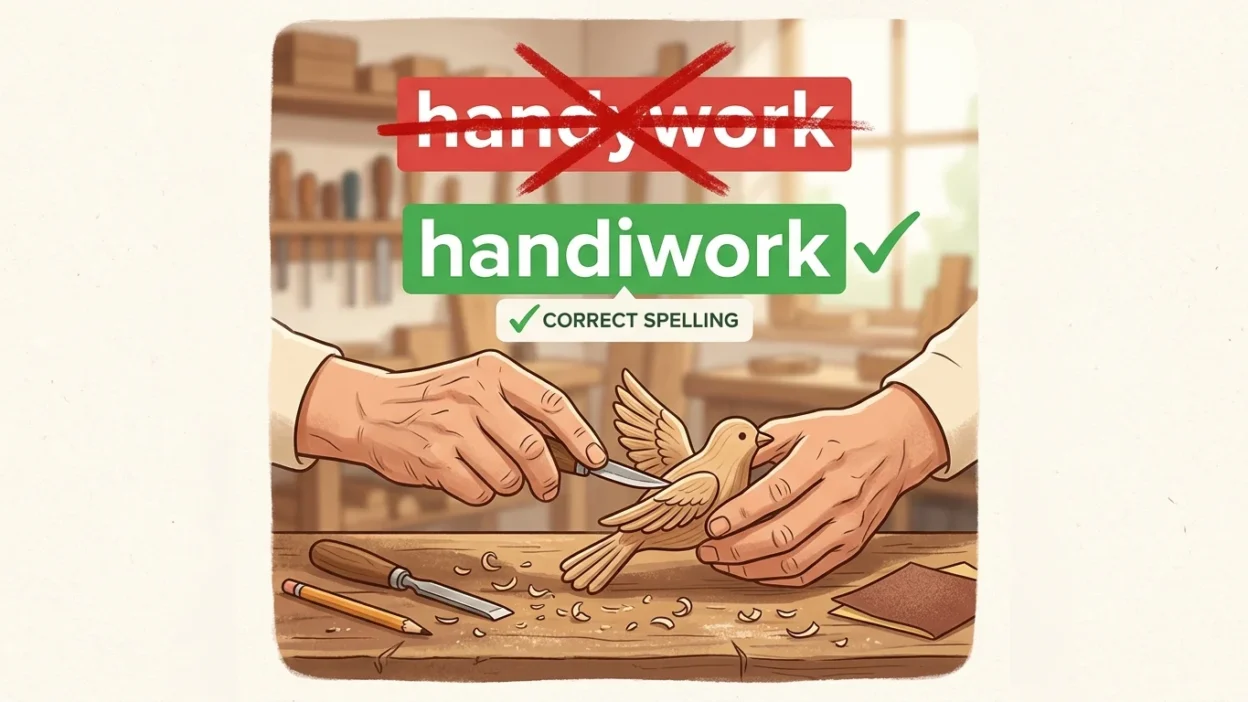
Many learners feel confused between handiwork and handywork. Both words look very similar, and both seem to relate to work done by hand. Because of this, it is easy to think they are both correct.
This confusion usually happens because English spelling can be tricky. Some words follow patterns, while others come from older forms and keep unusual spellings. In this case, only one form is standard in modern English.
Quick Answer
- ✅ Handiwork = correct spelling
- ❌ Handywork = incorrect (not standard English)
- Use handiwork to describe something made by hand
Simple Background Explanation
Let’s start with the correct word: handiwork. It means something made by hand or created with skill and effort. Examples: This painting is her handiwork. The table is fine handiwork.
The word comes from older English forms combining “hand” and “work,” and over time it became “handiwork.” The “i” is part of its traditional spelling. People often write “handywork” because they think of the word “handy,” but this is incorrect.
Clear Explanation of the Difference
Handiwork is the correct word. It is used to describe something made by hand or created with skill. Example: The sculpture is the artist’s handiwork.
Handywork is incorrect. It is a misspelling and not used in standard English. So, there is no real difference only one correct form exists.
Comparison Table
| Feature | Handiwork ✅ | Handywork ❌ |
|---|---|---|
| Correct spelling | Yes | No |
| Used in English | Yes | No |
| Meaning | Work done by hand | Not correct |
| Word type | Noun | Incorrect form |
| Example | Beautiful handiwork | Not correct |
Which One to Use and When
Always use handiwork. Use it when talking about handmade items, skilled work, or something created with effort. Examples: The dress is beautiful handiwork. This carving is amazing handiwork. The damage was the handiwork of vandals. Never use handywork.
Common Mistakes People Make
One common mistake is thinking “handywork” is correct because “handy” is a real word. Another mistake is spelling based on meaning, like handy + work, which is wrong. Some learners copy incorrect usage from others or do not know the original form of the word. Overthinking simple words can also lead to errors.
Everyday Real Life Examples
In emails: The design is excellent handiwork. We appreciate your handiwork on this project.
On social media: Look at this amazing handiwork! Her handiwork is inspiring.
In news: The damage was believed to be the handiwork of a group. The artist’s handiwork is displayed in the gallery.
In daily use: This is fine handiwork. The cake decoration is her handiwork. The repair work is his handiwork.
Short Learning Section for Students and Beginners
Easy rule: Always spell it handiwork with “i.” Memory trick: “Hand + I + work = handiwork.” Similar thinking helps you remember the correct form. Quick practice:
This painting is her ______. The table shows fine ______. The design is beautiful ______. Answers: handiwork, handiwork, handiwork.
FAQ
1. Is “handywork” ever correct?
No, it is not correct in standard English.
2. What does “handiwork” mean?
It means work made by hand or with skill.
3. Why is “handiwork” spelled with an “i”?
Because it comes from older English spelling traditions.
4. Is “handiwork” formal or informal?
It can be used in both formal and informal writing.
5. Can “handiwork” be used for art?
Yes, it is often used for art, crafts, and skilled work.
6. Why do people write “handywork”?
Because they connect it with the word “handy.”
7. Is “handiwork” a noun?
Yes, it is a noun.
8. How can I remember the correct spelling?
Use the memory trick: “Hand + I + work.”
Conclusion
The confusion between handiwork and handywork is very common, but the answer is simple. Handiwork is correct, and handywork is incorrect. Always remember the “i” in the middle. With practice, this spelling will become natural and easy.