Many students and English learners feel confused about more then vs more than. These two phrases look almost the same. The only difference is one small letter: “e” or “a.”
But even though the spelling difference is small, the meaning difference is big.
If you have ever asked:
- Is it more then or more than?
- Why does my teacher mark it wrong?
- When should I use “then” and when should I use “than”?
This guide will explain everything in very simple English so you understand it clearly the first time.
Quick Answer
Here is the clear and simple answer:
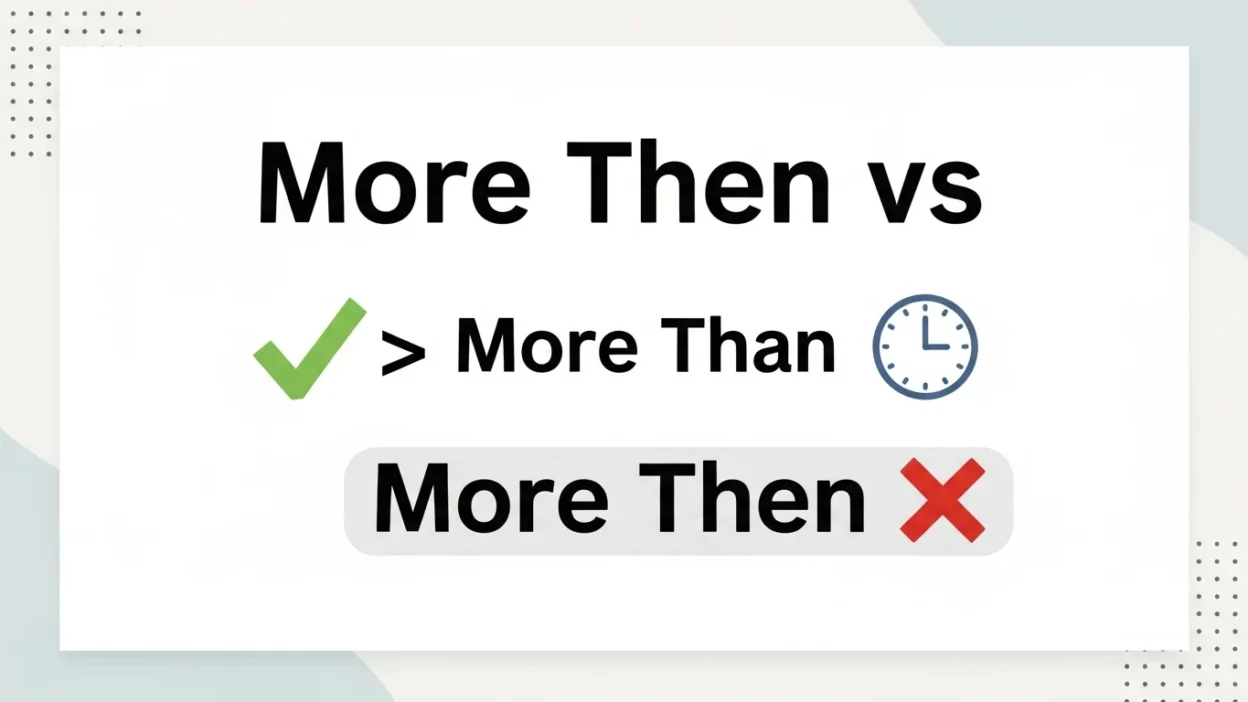
- ✅ More than = Correct (used for comparison or amount)
- ❌ More then = Incorrect in most situations
You should almost always use:
More than
“More then” is usually a grammar mistake.
Simple Background: Then vs Than
To understand this topic, we must understand the difference between then and than.
What Does “Than” Mean?
“Than” is used for comparison.
Examples:
- She is taller than me.
- This book is better than that one.
- I have more than five dollars.
“Than” compares two things.
What Does “Then” Mean?
“Then” is about time or what happens next.
Examples:
- I finished my homework, then I watched TV.
- First we eat, then we leave.
- Back then, life was simple.
“Then” is related to time or order.
Clear Explanation of the Difference
Now let’s look at the phrases clearly.
What Is “More Than”?
“More than” is correct and very common.
It means:
- A greater amount
- A higher number
- Something extra
- Comparison
Examples:
- I have more than ten books.
- She earns more than her brother.
- This costs more than I expected.
- He is more than a friend.
In all these sentences, “more than” compares or shows a greater amount.
What Is “More Then”?
“More then” is usually wrong.
Because:
- “Then” is about time.
- “More” is about amount or comparison.
- They do not normally go together.
Incorrect examples:
- ❌ I have more then five dollars.
- ❌ She is more then happy.
- ❌ It costs more then I thought.
Correct versions:
- ✅ I have more than five dollars.
- ✅ She is more than happy.
- ✅ It costs more than I thought.
Comparison Table
Here is a simple table to help you see the difference quickly:
| Feature | More Than | More Then |
|---|---|---|
| Correct in standard English? | ✅ Yes | ❌ No (usually) |
| Used for comparison? | Yes | No |
| Used for amount? | Yes | No |
| Used for time? | No | “Then” alone is used for time |
| Common mistake? | No | Yes |
Simple rule:
👉 Use more than for comparison and numbers.
👉 Do not use more then.
Which One Should You Use?
You should use more than in these situations:
1. Numbers
- There are more than 100 students.
- I waited more than an hour.
- She owns more than two houses.
2. Comparisons
- He runs faster than me.
- She studies more than her sister.
- This is more than I can handle.
3. Emphasis
- She is more than ready.
- He is more than capable.
- This is more than enough.
In all these cases, the correct phrase is more than.
Why Do People Write “More Then”?
Here are common reasons.
1. Spelling Confusion
“Then” and “than” look very similar. Many learners mix them up.
2. Pronunciation
When spoken quickly, “than” and “then” can sound similar.
3. Typing Fast
Sometimes it is just a typing mistake. But in formal writing, it will still be marked wrong.
Common Mistakes People Make
Let’s look at wrong and correct examples.
❌ I have more then 20 dollars.
✅ I have more than 20 dollars.
❌ She is smarter more then him.
✅ She is smarter than him.
(or)
✅ She studies more than him.
❌ It is more then enough.
✅ It is more than enough.
Always check: Is this about comparison or amount? If yes, use than.
Everyday Real Life Examples
Here are examples from daily life.
In News
- The company made more than $1 million.
- More than 500 people attended the event.
- The storm lasted more than three hours.
In School Writing
- There are more than 30 students in the class.
- This problem is more than I expected.
- The result was more than surprising.
In Work Emails
- We received more than 50 applications.
- The project took more than two weeks.
- The cost is more than planned.
On Social Media
- I slept more than 8 hours!
- This movie is more than amazing.
- I have more than enough food.
You will almost never see “more then” in correct writing.
Short Learning Section for Students and Beginners
Here is a very easy memory trick.
Memory Trick
Think:
Than = Compare
Both words have the letter A.
thAn → compAre
They both contain “A.”
So when comparing, use than.
Another Simple Trick
- Then = Time
- Than = Compare
If you can replace the word with “next” or “after that,” use then.
If you are comparing two things, use than.
Quick Practice
Choose the correct phrase:
- I have more ___ 10 books.
- a) then
- b) than
- First we eat, ___ we go home.
- a) then
- b) than
- She earns more ___ her brother.
- a) than
- b) then
Answers:
- b) than
- a) then
- a) than
(FAQ)
1. Is “more then” ever correct?
In almost all cases, no. It is usually a mistake.
2. What does “more than” mean?
It means a greater amount or comparison.
3. When do we use “then”?
We use “then” for time or order.
Example:
- We ate, then we left.
4. Why is this mistake common?
Because “then” and “than” look and sound similar.
5. Is this mistake serious?
In casual messages, people may understand you. But in school or professional writing, it will be marked wrong.
6. How can I remember the difference?
Remember:
Than = Compare
Then = Time
7. Is “more than” formal?
It is correct in both formal and informal writing.
Final Conclusion
The difference between more then vs more than is simple:
- ✅ More than is correct for comparison and amounts.
- ❌ More then is usually incorrect.
If you remember one clear rule, remember this:
Use “than” when comparing.
Use “then” for time.
Now you can write confidently and avoid this very common English mistake.

Weston Maddox is both an author and administrator at SpellCorrect. He oversees site operations while creating accurate, easy-to-understand content focused on correct spelling and proper word usage, helping readers improve writing clarity, precision, and confidence across academic, professional, and everyday English communication.