Many students and English learners feel confused when they see the words “presense” and “presence.” These two spellings look very similar, and when people hear the word spoken, it can be difficult to know which spelling is correct.
This confusion often happens because English spelling does not always match pronunciation perfectly. When people hear the sound “pre-zence,” they may guess the spelling and write presense instead of presence.
Because of this, many people ask questions such as:
- Is presense correct?
- Is presence the right spelling?
- Are these two different words?
In this article, everything will be explained clearly in very simple English so students, beginners, and general readers can understand the difference easily.
Quick Answer
Here is the simple and clear answer:
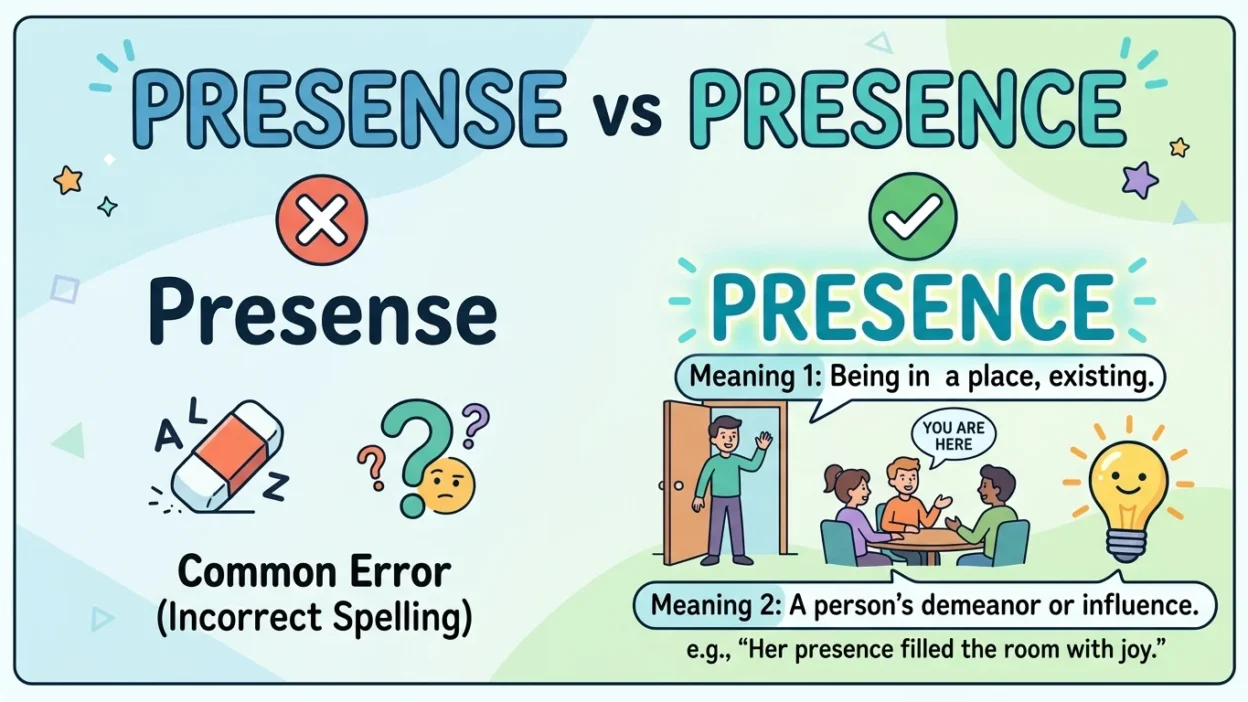
- Presence is the correct spelling.
- Presense is not correct in standard English.
- Dictionaries and professional writing always use presence.
- Presense is usually just a spelling mistake.
So whenever you want to write this word, you should always choose presence.
Simple Background of the Word
To understand the correct spelling, it helps to know where the word comes from.
The word presence comes from an older word meaning “being present” or “being in a place.”
The root idea comes from the word present, which means:
- Being in a place
- Existing somewhere at a certain time
For example:
- She is present in class today.
- All students must be present during the exam.
From this word, English created the noun presence, which means the state of being present.
So the word follows this pattern:
present → presence
Because of this pattern, the spelling presence became the standard and accepted form.
Clear Explanation of the Difference
Now let’s look closely at both spellings.
Presence
Presence is the correct and standard word.
It means:
- Being in a place
- The feeling that someone is there
- The influence or importance of someone
Examples:
- Her presence made everyone feel calm.
- The teacher’s presence keeps the class quiet.
- The company has a strong online presence.
This spelling appears in dictionaries, books, newspapers, and formal writing.
Presense
Presense is not the correct spelling.
People usually write presense because they try to spell the word the way it sounds. The sound “zence” may make them think the word ends with sense.
However, the correct ending is -ence, not -ense.
Because of this, presense is considered a spelling mistake in standard English.
Comparison Table
| Feature | Presence | Presense |
|---|---|---|
| Correct spelling | Yes | No |
| Found in dictionaries | Yes | No |
| Used in formal writing | Yes | No |
| Common spelling mistake | No | Yes |
| Recommended to use | Yes | No |
This table clearly shows that presence is the correct word.
Which One to Use and When
You should always use presence when you want to describe someone or something being in a place or having influence.
Here are common situations where the word is used.
Talking About Someone Being There
Example:
“Her presence at the meeting was very important.”
This means she was physically there.
Talking About Influence
Example:
“The leader’s presence made everyone feel confident.”
This means the person’s influence or personality affected others.
Talking About the Internet
Example:
“The company wants to improve its online presence.”
This means the company wants to be more visible on the internet.
Talking About Feeling Someone Nearby
Example:
“The child felt safe in her mother’s presence.”
In all these situations, presence is the correct spelling.
Common Mistakes People Make
Many learners make similar spelling mistakes with this word.
Writing “presense”
Incorrect:
“Your presense is required at the meeting.”
Correct:
“Your presence is required at the meeting.”
Spelling the Ending Like “sense”
Some people think the word ends like sense or expense, which leads them to write presense.
But the correct ending is -ence.
Guessing the Spelling From Sound
Because the word sounds like pre-zence, some writers guess the spelling incorrectly.
The safe choice is always presence.
Everyday Real-Life Examples
Here are some examples showing how the word appears in daily life.
Example in an Email
“Your presence at tomorrow’s meeting would be greatly appreciated.”
Example in School
“The teacher’s presence helped students stay focused.”
Example in News
“The president’s presence at the event attracted many visitors.”
Example on Social Media
“Many small businesses want a stronger online presence.”
Example in Conversation
Person A:
“Will the manager attend the meeting?”
Person B:
“Yes, his presence is important.”
These examples show how common and useful this word is in everyday English.
Learning Tips for Students and Beginners
Here are two easy tricks to remember the correct spelling.
Remember the word “present”
The word presence comes from present.
present → presence
If you remember this connection, it becomes easier to spell the word correctly.
Remember the ending “-ence”
Many English nouns end with -ence, such as:
- difference
- silence
- patience
- presence
Seeing this pattern can help you remember the correct spelling.
(FAQ)
Is presense a real English word?
No. Presense is not considered a correct word in standard English. It is usually a spelling mistake.
What is the correct spelling?
The correct spelling is presence.
What does presence mean?
Presence means the state of being in a place or the influence someone has when they are there.
Why do people write presense?
Many people spell the word based on how it sounds. Because it sounds like pre-zence, they mistakenly write presense.
Can presense be used in informal writing?
It is not recommended. Even in casual writing, presence should be used.
What is an example sentence with presence?
Example:
“Her presence made the room feel more welcoming.”
Is presence used in business language?
Yes. For example, companies often talk about their online presence.
Is presence a noun or a verb?
Presence is a noun. It describes a state or condition of being present.
Conclusion
The difference between presense and presence is very simple.
Presence is the correct and standard spelling used in English. It describes the state of being somewhere or the influence someone has when they are there.
Presense, on the other hand, is a spelling mistake that often happens when people try to spell the word based on its sound.
To avoid confusion, remember this simple rule:
Always use presence, never presense.
Once you remember the connection between present and presence, the spelling becomes easy and natural.
English spelling may sometimes seem confusing, but small patterns like this can make learning much easier.