Many learners feel confused when they see “skiddish” and “skittish.” The words look similar, sound almost the same, and both seem to describe nervous behavior. Because of this, people often use the wrong spelling without noticing.
But here’s the truth: only one of these words is correct in standard English. In this simple guide, you will clearly understand the difference, learn when to use the correct word, and avoid common mistakes.
Quick Answer
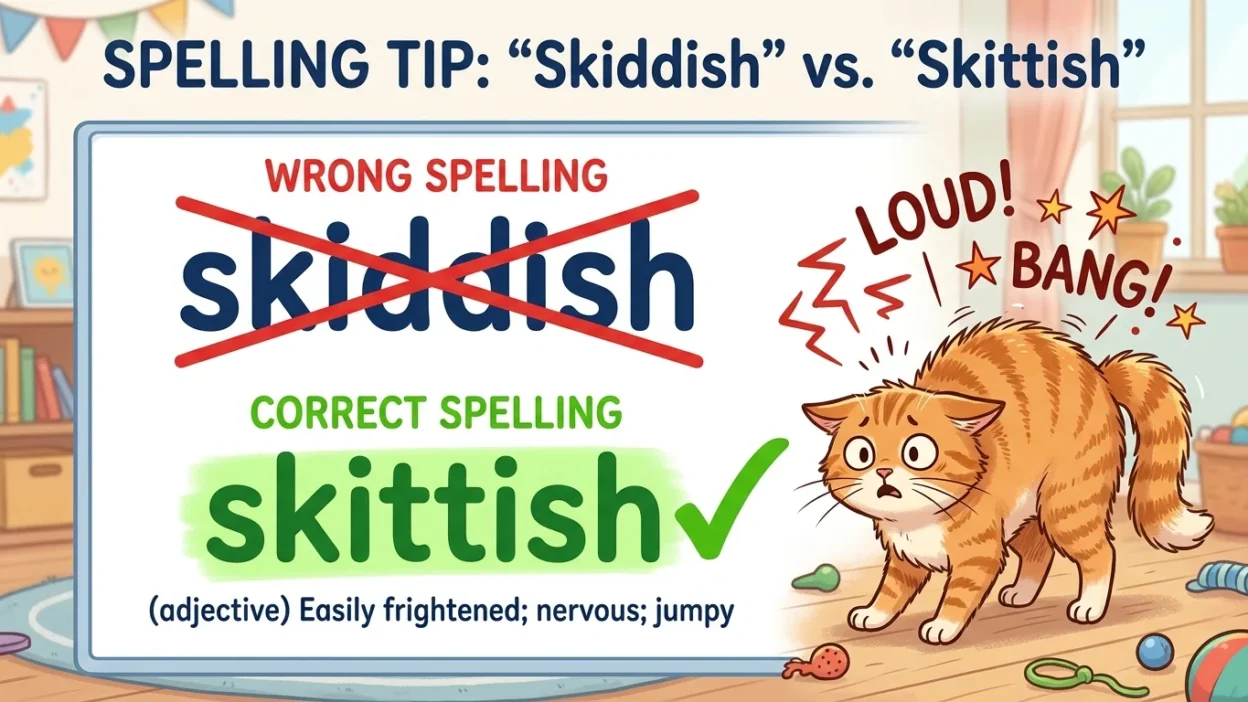
- Skittish ✅
- Correct spelling
- Means easily scared or nervous
- Commonly used in everyday English
- Skiddish ❌
- Incorrect spelling
- Not accepted in standard English
- Often used by mistake
👉 Always use “skittish” when you want to describe someone or something that gets scared easily.
Simple Origin or Background
The word “skittish” has been used in English for a long time. It originally described animals, especially horses, that jump or move suddenly when they feel afraid.
Over time, people started using it for humans too. Now, it can describe anyone who feels nervous, shy, or easily frightened.
The spelling “skiddish” likely comes from how people hear the word. Since “skittish” ends with a soft sound, some people mistakenly write it as “skiddish.” But this version is not correct.
Clear Explanation of the Difference
Let’s make it very simple:
What does “skittish” mean?
“Skittish” means:
- Easily scared
- Nervous or jumpy
- Quick to react to small things
It can describe:
- Animals: A horse that jumps at sounds
- People: Someone who feels nervous in new situations
Example:
- The cat was skittish and ran away when I moved.
What about “skiddish”?
“Skiddish” is:
- A misspelling
- Not used in correct English
- Common in informal writing, but still wrong
Example:
- Incorrect: She felt skiddish during the interview.
- Correct: She felt skittish during the interview.
Comparison Table
| Feature | Skittish ✅ | Skiddish ❌ |
|---|---|---|
| Spelling | Correct | Incorrect |
| Meaning | Easily scared or nervous | No real meaning |
| Usage | Standard English | Mistake |
| Common in speech | Yes | Sometimes (wrong form) |
| Should you use it? | Yes | No |
Which One to Use and When
You should always use “skittish.”
Use it when:
- Someone feels nervous in a new place
- An animal reacts quickly to noise
- A person is easily frightened
Examples:
- The child was skittish around strangers.
- The horse became skittish during the storm.
- He felt skittish before giving his speech.
❗ Never use “skiddish” in writing, exams, emails, or formal communication.
Common Mistakes People Make
Here are some mistakes learners often make:
1. Writing based on sound
People hear “skittish” and think it sounds like “skiddish,” so they write it incorrectly.
2. Mixing it with other words
Some learners confuse it with words like:
- “Skid” (to slide)
- “Skid marks”
These are completely different words.
3. Using it in formal writing
Using “skiddish” in:
- Essays
- Exams
- Emails
This can make your writing look incorrect or unprofessional.
Everyday Real-Life Examples
Here are simple examples from daily life:
In Emails
- Correct: I felt a bit skittish before the meeting.
- Incorrect: I felt skiddish before the meeting.
In News or Reports
- The market became skittish after the sudden announcement.
On Social Media
- I get skittish when speaking in front of a camera 😅
In Daily Conversations
- She’s a little skittish, but she will get comfortable soon.
- The dog is skittish around loud noises.
Short Learning Section for Students and Beginners
Here’s an easy way to remember:
Trick to Remember
👉 Skittish = Has “tt” → Think of “tremble” (shaking with fear)
So:
- Skittish = nervous or scared
Practice Sentences
Fill in the blank:
- The rabbit was very _______ when we got close.
- I feel _______ before exams.
- The dog became _______ during fireworks.
✅ Answers:
- skittish
- skittish
- skittish
Mini Tip
If you are not sure:
👉 Choose skittish — it is always the correct option.
FAQ Section
1. Is “skiddish” a real word?
No, “skiddish” is not a correct word in standard English.
2. Why do people say “skiddish”?
Because it sounds similar to “skittish,” people sometimes spell it incorrectly.
3. What does “skittish” mean in simple words?
It means easily scared or nervous.
4. Can “skittish” be used for people?
Yes, it can describe people who feel nervous or shy.
5. Can “skittish” be used for animals?
Yes, it is often used for animals like horses, cats, and dogs.
6. Is “skittish” formal or informal?
It is a normal everyday word. You can use it in both casual and formal situations.
7. Should I ever use “skiddish”?
No, you should avoid it completely.
8. What is a similar word to “skittish”?
Some similar words are:
- Nervous
- Jumpy
- Easily scared
Conclusion
The difference between “skiddish” and “skittish” is very simple:
- Skittish is the correct word and means easily scared or nervous.
- Skiddish is a spelling mistake and should not be used.
If you remember just one thing, remember this:
👉 Only “skittish” is correct.
Using the right spelling will make your English clearer, stronger, and more confident. Keep practicing, and soon it will feel natural to you.