Many students and English learners feel confused when writing the plural form of the word story. Some people write storys, while others write stories. At first glance, both may look possible, especially if you are still learning English spelling rules.
This confusion usually happens because English has special rules for making plurals. Sometimes we simply add “s”, but other times the spelling changes a little.
If you have ever stopped while writing and wondered whether to write storys or stories, you are not alone. The good news is that the rule is simple once you understand it.
In this article, we will clearly explain the correct form, why the mistake happens, and how to remember the rule easily. By the end, you will never be confused about this word again.
Quick Answer
Here is the simple answer:
- Stories is the correct plural form of story.
- Storys is incorrect and should not be used.
- When a word ends with “y”, the spelling often changes when making it plural.
- For story, the “y” changes to “ies.”
Examples:
- One story
- Two stories
Correct sentence:
- The teacher told three stories.
Incorrect sentence:
- The teacher told three storys.
So remember: stories is correct, storys is wrong.
Simple Background of the Word
The word story has been used in English for many hundreds of years. It usually means a description of events, either real or imagined.
People use the word story in many ways:
- A tale someone tells
- A written narrative in a book
- News or reports
- Personal experiences
Examples:
- A bedtime story
- A news story
- A funny story from childhood
When people talk about more than one story, they need the plural form. That is where the spelling rule becomes important.
The Main Difference Explained Simply
The difference between storys and stories is very simple:
- Stories follows the correct English plural rule.
- Storys breaks the rule and is incorrect.
Why does the spelling change?
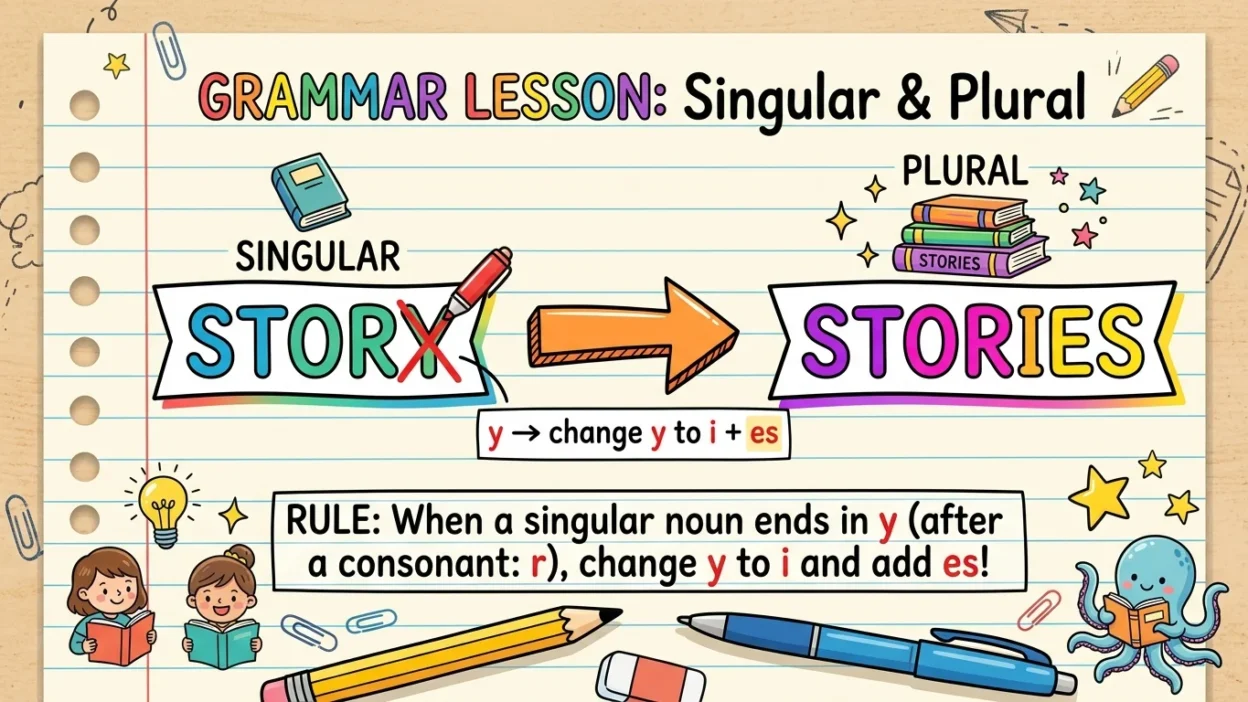
When a word ends with “y” and the letter before the y is a consonant, the plural form changes.
Instead of adding s, we:
- Remove y
- Add ies
So the change looks like this:
story → stories
This rule also applies to many other English words.
Examples:
- baby → babies
- city → cities
- lady → ladies
- family → families
Because story ends with a consonant r followed by y, it follows the same rule.
That is why the correct plural is stories.
Comparison Table
| Word Form | Is it Correct? | Meaning | Example Sentence |
|---|---|---|---|
| story | Yes | One narrative or tale | She wrote a short story. |
| stories | Yes | More than one story | The book has ten stories. |
| storys | No | Incorrect spelling | ❌ I read many storys yesterday. |
The key point is simple: stories is always correct for the plural.
Which One Should You Use and When
You should always use stories when talking about more than one story.
Use story when you mean only one.
Use “story”
Examples:
- I heard a beautiful story today.
- My grandfather told me a story about his childhood.
- She wrote a short story for school.
Use “stories”
Examples:
- The teacher shared several stories.
- Children love bedtime stories.
- The newspaper published three stories about the event.
Never use “storys”
Even though it may look logical to add s, English spelling rules do not allow it here.
Common Mistakes People Make
Many learners make the same mistakes with this word. Let’s look at the most common ones.
1. Simply adding “s”
Many people think every plural needs just s.
Example mistake:
- I wrote two storys.
Correct version:
- I wrote two stories.
2. Forgetting the “y to ies” rule
This rule appears in many English words. Forgetting it can cause spelling errors.
Wrong:
- baby → babys
- city → citys
Correct:
- babies
- cities
3. Typing too quickly
Sometimes the mistake happens simply because someone types fast and does not check spelling.
This often happens in:
- social media posts
- messages
- comments
- emails
4. Learning English as a second language
ESL learners sometimes translate directly from their own language, where plural rules are different.
That is normal, and practice will fix it quickly.
Everyday Real Life Examples
To understand the difference better, let’s see how the word stories appears in daily life.
In emails
Correct:
- I enjoyed the stories you shared in your email.
Incorrect:
- I enjoyed the storys you shared in your email.
In social media posts
Correct:
- She posted several inspiring stories online.
Incorrect:
- She posted several inspiring storys online.
In school writing
Correct:
- Our class read five short stories.
Incorrect:
- Our class read five short storys.
In news writing
Correct:
- The newspaper covered many stories about the storm.
In everyday conversation
People might say:
- My grandmother knows many funny stories.
- Children enjoy adventure stories.
You will almost always see stories, never storys.
Learning Tip for Students and Beginners
Here is a very easy trick to remember the rule.
Think about this simple pattern:
Consonant + Y → IES
Example pattern:
- baby → babies
- city → cities
- lady → ladies
- story → stories
So whenever you see a word ending in y, check the letter before it.
If it is a consonant, change y → ies.
Quick practice
Try changing these words into plural:
- story
- baby
- family
- city
Answers:
- stories
- babies
- families
- cities
Practicing like this helps the rule stay in your memory.
Frequently Asked Questions
1. Is “storys” ever correct?
No. Storys is always incorrect in standard English.
2. Why does story become stories?
Because of the plural rule for words ending in consonant + y. The y changes to ies.
3. What is the plural of story?
The plural is stories.
Example:
- The book contains ten stories.
4. Do all words ending in “y” change to “ies”?
Not always.
If the letter before y is a vowel, we simply add s.
Example:
- boy → boys
- toy → toys
But if the letter before y is a consonant, we change y → ies.
Example:
- city → cities
- story → stories
5. Is “stories” used in both speaking and writing?
Yes. It is the correct form in:
- school writing
- books
- emails
- news
- daily conversations
6. Can “stories” have more than one meaning?
Yes.
It can mean:
- multiple narratives or tales
- news reports
- parts of a building (in some contexts)
Example:
- The building has three stories.
7. Why do people still write “storys”?
Usually because:
- they forget the spelling rule
- they type quickly
- they are still learning English
8. Is this rule important for exams?
Yes. Spelling mistakes like storys can reduce marks in:
- school tests
- essays
- language exams
Conclusion
The confusion between storys and stories is very common, especially for students and English learners. However, the rule is actually simple once you understand it.
The correct plural form of story is stories. The spelling changes because English words that end in consonant + y usually replace the y with ies when they become plural.
So remember this pattern:
story → stories
The form storys does not follow English spelling rules and should not be used.
Whenever you write about more than one story, always choose stories. With a little practice, this rule will quickly become natural, and you will never need to stop and think about it again.