Many English learners confuse “relieving” and “reliving” because the words look very similar. However, they have completely different meanings.
Using the wrong word can change the meaning of a sentence entirely. For example, talking about a stressful memory and talking about reducing stress are two very different ideas.
This guide will explain the difference in simple English so students, ESL learners, and beginners can understand it easily.
Quick Answer
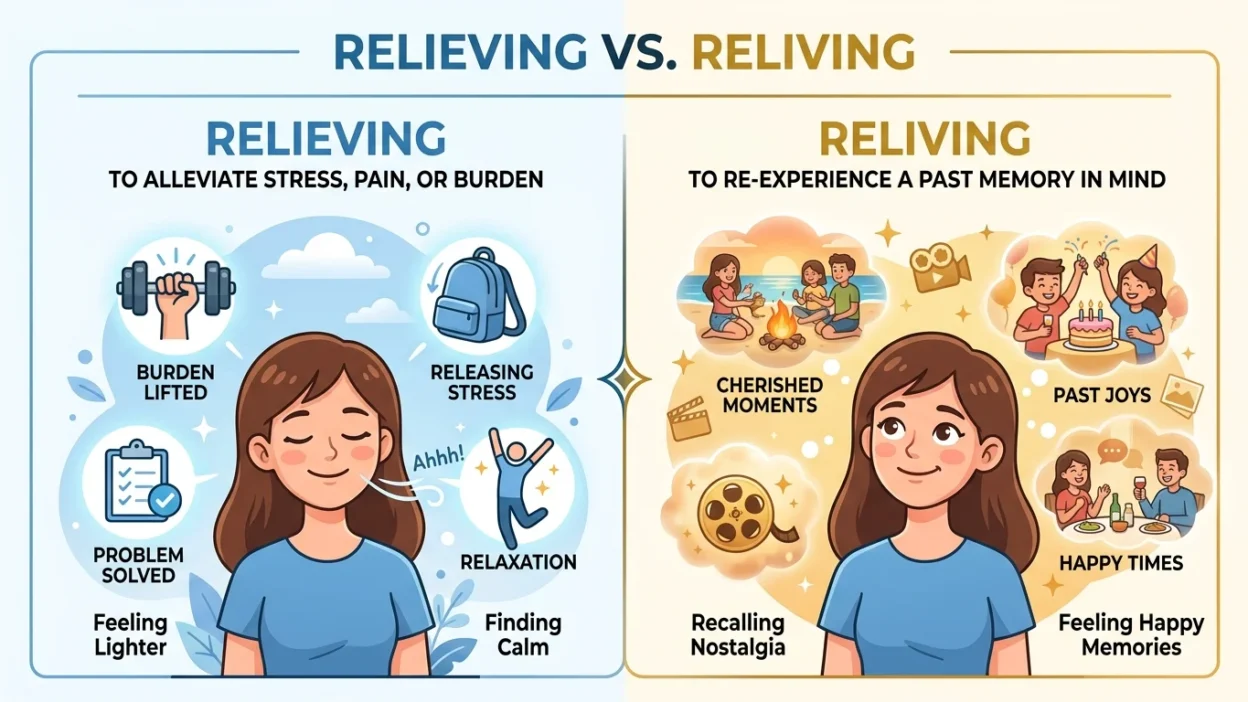
- Relieving = reducing pain, stress, worry, or discomfort
- Reliving = experiencing a past event again in your mind
Examples:
- Taking a break was relieving after a long day.
- He was reliving his childhood memories.
Simple Background Explanation
Although these words look alike, they come from different verbs:
- Relieving comes from relieve
- Reliving comes from relive
The extra letter “e” in relieve changes the meaning completely.
Clear Explanation of the Difference
What does “relieving” mean?
Relieving is the present participle of relieve.
It means reducing or removing something unpleasant, such as:
- Stress
- Pain
- Anxiety
- Pressure
- Worry
Examples:
- The medicine is relieving my headache.
- Talking to a friend was relieving.
- The cool breeze was relieving after the hot afternoon.
It often describes something that makes a person feel better.
What does “reliving” mean?
Reliving is the present participle of relive.
It means experiencing a past event again through memory, thoughts, or emotions.
Examples:
- She was reliving her graduation day.
- He spent the evening reliving old memories.
- Watching the video felt like reliving the moment.
The event is not happening again in reality. It is happening again in someone’s mind.
Comparison Table
| Word | Comes From | Meaning | Example Sentence |
|---|---|---|---|
| Relieving | Relieve | Reducing stress, pain, or discomfort | The treatment is relieving the pain. |
| Reliving | Relive | Experiencing a memory again | He is reliving his childhood memories. |
Which One to Use and When
Use relieving when:
- Something reduces discomfort
- A situation makes you feel better
- Stress or pain becomes less severe
Examples:
- The vacation was very relieving.
- The medication is relieving the symptoms.
Use reliving when:
- Thinking about the past
- Remembering experiences vividly
- Feeling old emotions again
Examples:
- She was reliving her wedding day.
- The photographs helped him relive the experience.
Quick Tip
- Relieving = relief
- Reliving = living again
If you can replace the word with “bringing relief,” use relieving.
If you can replace it with “experiencing again,” use reliving.
Common Mistakes People Make
1. Using relieving when talking about memories
❌ I was relieving my childhood memories.
✔ I was reliving my childhood memories.
2. Using reliving when talking about stress reduction
❌ The massage was reliving my back pain.
✔ The massage was relieving my back pain.
3. Focusing only on spelling
Because the words look similar, learners often choose the wrong one without checking the meaning.
4. Forgetting the root words
Remember:
- Relief → relieving
- Live again → reliving
Everyday Real Life Examples
In Daily Life
- A hot shower was relieving after a long day.
- Looking through old photos was reliving happy moments.
In School
- Finishing the exam was relieving.
- Alumni often enjoy reliving their school memories.
In Work or Office
- Completing the project was relieving.
- The team spent time reliving past successes.
In Conversations
- It was relieving to hear the good news.
- I keep reliving that amazing trip.
On Social Media
- Finally finished the assignment. So relieving! 😌
- Reliving my vacation through old pictures 🌴
Short Learning Section for Students and Beginners
Step 1: Check the meaning
Ask yourself:
- Is it about reducing pain or stress? → relieving
- Is it about remembering the past? → reliving
Step 2: Practice
Fill in the blanks:
- The medicine is ______ my headache.
- She is ______ her childhood memories.
- Hearing the results was ______.
- Watching the video felt like ______ the event.
Answers:
- relieving
- reliving
- relieving
- reliving
FAQ
What is the difference between relieving and reliving?
Relieving means reducing discomfort, while reliving means experiencing a past memory again.
Is relieving related to relief?
Yes. Relieving comes from the word relief and means making something better.
What does reliving mean?
It means remembering and mentally experiencing a past event again.
Can memories be relieving?
Yes. A memory can be relieving if it makes someone feel better, but the act of experiencing that memory again is reliving.
Which word is used for pain reduction?
Relieving is used for reducing pain or discomfort.
Which word is used for memories?
Reliving is used when talking about memories and past experiences.
How can I remember the difference?
Think:
- Relieving = relief
- Reliving = living again
Can both words appear in the same sentence?
Yes.
Example:
- Reliving the difficult experience was emotional, but talking about it was relieving.
Conclusion
The difference between relieving and reliving is easy to remember once you focus on meaning:
- Relieving means reducing pain, stress, worry, or discomfort.
- Reliving means experiencing a past event again through memory.
Whenever you are unsure, ask yourself whether the sentence is about feeling better or remembering the past. That simple question will help you choose the correct word every time.