Many learners feel confused when they see “lovie” and “lovey.” These two words look very similar and sound almost the same. Because of this, people often think they are interchangeable or equally correct. However, there is a small but important difference between them.
Understanding this difference will help you write more clearly and avoid common mistakes. This guide explains everything in very simple English so that anyone can understand it easily.
Quick Answer
- Lovey = correct and commonly used word
- Lovie = less common, informal spelling
- Both come from “love,” but only one is standard
- 👉 Use “lovey” in most situations
Simple Origin or Background
Both “lovey” and “lovie” come from the word “love.” In English, people often add endings like -y or -ie to make words sound softer or more affectionate.
For example:
- Dog → doggy
- Cat → kitty
- Sweet → sweetie
In the same way:
- Love → lovey
- Love → lovie
Over time, “lovey” became the more accepted spelling in everyday English. “Lovie” stayed more informal and is not widely used in standard writing.
Clear Explanation of the Difference
The main difference is about correctness and usage.
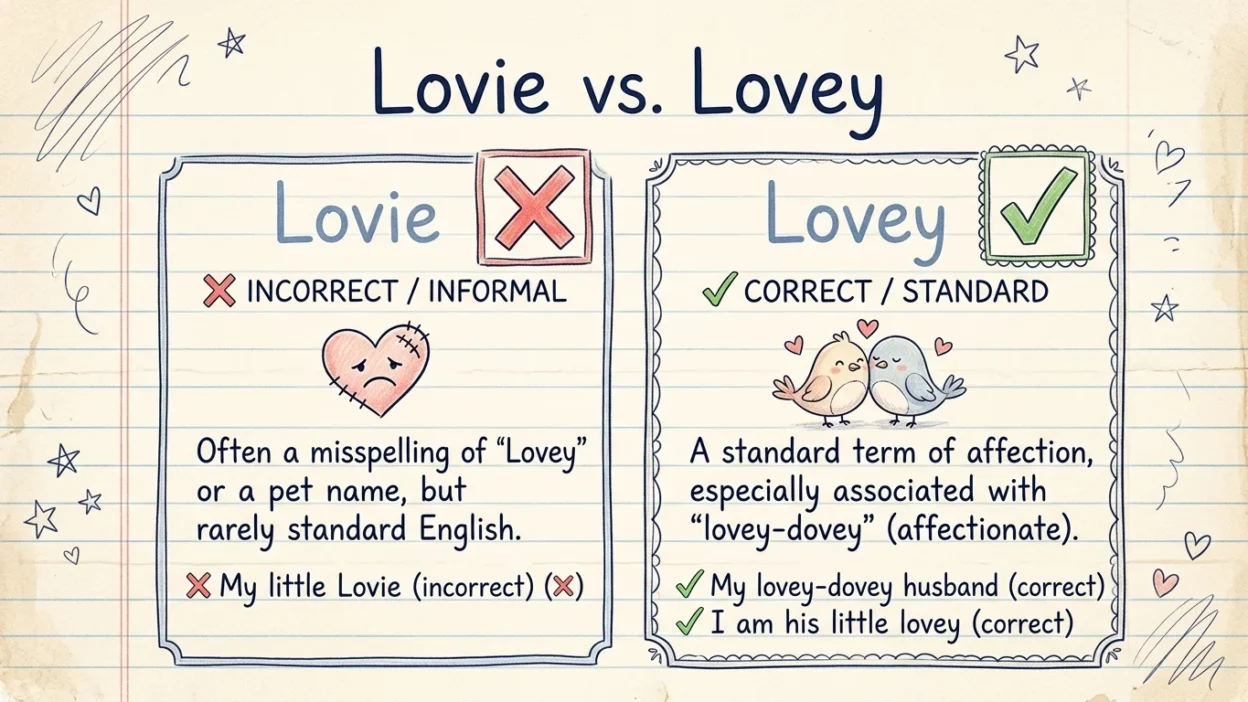
“Lovey” is a real and accepted English word. It is used to show affection, kindness, or friendliness. You can use it in casual conversations, especially with people you know well.
“Lovie” is not a standard spelling. It may appear in personal messages, nicknames, or creative writing, but it is not commonly used in proper English.
So, while both words carry the same feeling of affection, only “lovey” is considered correct and natural in most situations.
Comparison Table
| Feature | Lovey | Lovie |
|---|---|---|
| Spelling | Standard | Less common |
| Usage | Common in English | Rare / informal |
| Meaning | Term of affection | Same meaning |
| Formality | Informal but accepted | Very informal |
| Correct choice | ✅ Yes | ❌ Not recommended |
Which One to Use and When
If you are learning English or want to be correct, always choose “lovey.”
Use “lovey” when:
- Speaking casually with friends or family
- Writing friendly messages
- You want natural and correct English
Avoid “lovie” unless:
- It is a personal nickname
- You are writing very casually or creatively
In general, “lovey” is the safe and correct option.
Common Mistakes People Make
One common mistake is thinking both spellings are equally correct. They are not. “Lovey” is standard, while “lovie” is not.
Another mistake is using “lovie” in formal writing like emails or school work. This can look unprofessional.
Some learners also spell it as “lovie” because it sounds the same. This is a spelling mistake caused by pronunciation confusion.
Finally, some people overuse “lovey” in situations where it does not fit. Remember, it is a friendly word and should be used in the right context.
Everyday Real Life Examples
Daily conversation:
- “How are you, lovey?”
- “Take care, lovey.”
Family use:
- “Come here, lovey.”
- “Good night, lovey.”
Friendly messages:
- “Thanks for your help, lovey!”
- “See you soon, lovey.”
Social media:
- “Stay strong, lovey ❤️”
- “You did great, lovey!”
Informal “lovie” examples:
- “Hi lovie, miss you!”
- “Take care, lovie!”
These “lovie” examples are casual and not standard.
Short Learning Section for Students and Beginners
Here is a simple way to remember the difference:
- Lovey = correct and common
- Lovie = less common and informal
Practice:
Fill in the blank with the correct word:
- Hello, ______!
- Good night, ______.
- Take care, ______.
Correct answers:
- Lovey
- Lovey
- Lovey
Simple tip: If you are unsure, always choose “lovey.”
FAQ
Is “lovie” a correct English word?
It exists, but it is not standard. It is mostly used informally.
Which is correct: lovey or lovie?
“Lovey” is the correct and commonly accepted spelling.
Can I use “lovie” in formal writing?
No, it is better to avoid it in formal situations.
Do both words mean the same thing?
Yes, they both show affection, but only “lovey” is standard.
Is “lovey” still used today?
Yes, it is still used in casual and friendly speech.
Why do people write “lovie”?
Because it sounds the same and some prefer the “-ie” style.
Should beginners use “lovie”?
No, beginners should use “lovey” to stay correct.
Conclusion
The difference between “lovie” and “lovey” is simple. Both come from the word “love” and carry the same warm meaning, but only one is widely accepted.
“Lovey” is the correct, natural, and safe choice.
“Lovie” is informal and less common.
If you want clear and correct English, always use “lovey.” This small choice will help you avoid mistakes and sound more natural.