Many learners feel confused between wholistic and holistic. Both words look very similar, and both seem to have the same meaning. Because of this, it is easy to think they are both correct.
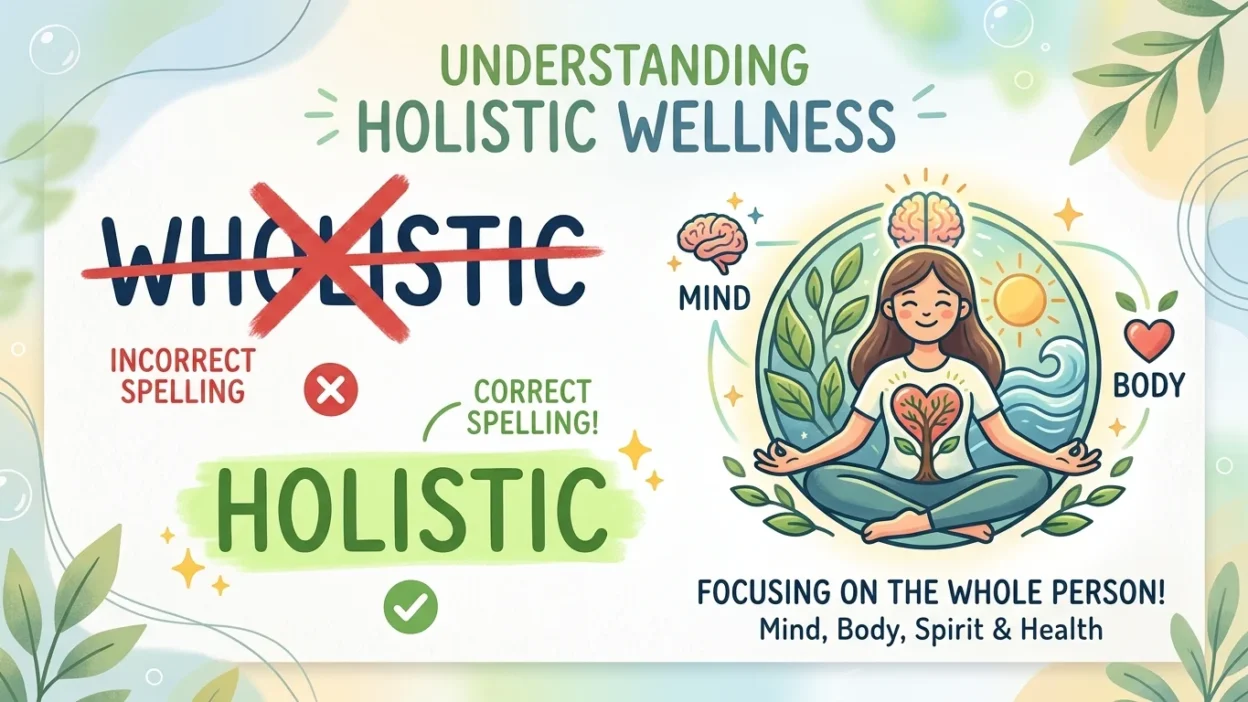
The confusion usually comes from the word “whole.” Since holistic is about the “whole” system, some people add a “w” and write wholistic. While you may sometimes see this spelling, it is not the standard form in modern English.
In this article, you will learn the correct spelling, understand the meaning, and see how to use the word clearly and correctly.
Quick Answer
- ✅ Holistic = correct and standard spelling
- ⚠️ Wholistic = sometimes seen, but not standard
- Use holistic in formal and correct English
Simple Background Explanation
Let’s start with the correct word: holistic
What does “holistic” mean?
It means:
- looking at the whole system, not just one part
- understanding something completely
Examples:
- A holistic approach to health
- Holistic education focuses on the whole person
Where does the word come from?
The word holistic comes from “whole.” It was formed to describe ideas that focus on the complete system rather than small parts.
Why do people write “wholistic”?
People often:
- connect the word directly with “whole”
- think adding “w” makes it clearer
That is why wholistic appears sometimes, especially in informal writing. However, it is not the standard spelling.
Clear Explanation of the Difference
What is “holistic”?
- It is the correct and accepted spelling
- It is used in education, health, and general English
- It means focusing on the whole system
Example:
- The doctor uses a holistic approach to treatment
What is “wholistic”?
- It is a non-standard spelling
- It is sometimes used informally
- It is not preferred in correct writing
So, both forms may carry the same meaning, but only one is widely accepted.
Comparison Table
| Feature | Holistic ✅ | Wholistic ⚠️ |
|---|---|---|
| Standard spelling | Yes | No |
| Used in formal English | Yes | No |
| Meaning | Whole or complete view | Same meaning |
| Preference | Strongly preferred | Avoid if possible |
| Example | Holistic care | Less common |
Which One to Use and When
Always use holistic, especially in:
- school writing
- exams
- professional communication
- formal texts
Examples:
- A holistic approach to education
- Holistic health focuses on mind and body
- We need a holistic plan
When might “wholistic” appear?
- In informal writing
- In some personal or alternative contexts
Even then, it is better to use holistic.
Common Mistakes People Make
1. Adding “w” because of “whole”
People think:
- whole → wholistic
But the correct form is:
- holistic
2. Thinking both are equal
Some learners believe both spellings are equally correct, but they are not.
3. Using “wholistic” in formal writing
This can make writing look less correct or less professional.
4. Learning from incorrect sources
Seeing “wholistic” online can confuse learners.
5. Overthinking the spelling
Trying to connect meaning too directly can lead to spelling mistakes.
Everyday Real Life Examples
In Emails
- We need a holistic plan for this project
- She takes a holistic approach to problem-solving
In Social Media
- Holistic living is becoming popular
- Focus on holistic health and well-being
In Education
- Schools should support holistic development
- A holistic method improves learning
In Daily Use
- Think in a holistic way
- This is a holistic solution
- We need a holistic view
Short Learning Section for Students and Beginners
Easy Rule
- Always write holistic (without “w”)
Memory Trick
Think:
“Holistic = whole idea, no ‘w’ needed”
Quick Practice
Fill in the blanks:
- We need a ______ approach
- This is a ______ solution
- She believes in ______ health
Answers:
- holistic
- holistic
- holistic
FAQ Section
1. Is “wholistic” wrong?
It is not fully wrong, but it is non standard and not preferred.
2. Which spelling is correct?
“Holistic” is the correct and standard spelling.
3. Do both words mean the same thing?
Yes, they usually have the same meaning.
4. Should I use “wholistic” in exams?
No, always use “holistic.”
5. Why do people write “wholistic”?
Because they connect it with the word “whole.”
6. Is “holistic” formal or informal?
It is correct in both formal and informal English.
7. Where is “holistic” commonly used?
In health, education, and general discussions.
8. How can I remember the correct spelling?
Use the memory trick: “No ‘w’ in holistic.”
Conclusion
The confusion between wholistic and holistic is common, but easy to fix.
- Holistic is correct and standard
- Wholistic is non standard and should be avoided
Even though both can carry the same meaning, it is always better to use holistic in correct English. This will make your writing clear, accurate, and more natural.